Shortcode Cleaner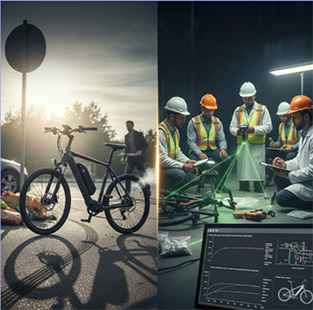
E-bikes are no longer just bicycles; they are quiet, 30 mph motorized machines. Their convenience has come at a steep price, with accident rates soaring and injuries now mimicking those of motorcycle crashes, not bicycle tumbles. This article reveals the frightening capabilities of modern e-bikes, and details the alarming surge in catastrophic injuries. When an e-bike accident occurs, forensic engineers are essential investigators. Their work is crucial in supporting legal claims, insurance assessments, and critical safety improvements.
The Rise of E-Bike Accidents and Top Speeds
Recent data from the US Consumer Product Safety Commission (CPSC) shows that injuries associated with e-bikes have risen dramatically, increasing approximately ten-fold from 2019 to 2022 – a rate significantly faster than sales growth. Furthermore, the injuries sustained are often more severe, resembling those seen in motorcycle crashes rather than traditional bicycle accidents.
A primary factor contributing to this increase is the speed and power of modern e-bikes. While many states adopt a three-tier classification system, the lines are often blurred in practice:
Class 1: Pedal-assisted only, motor stops assisting at 20 mph.
Class 2: Throttle and pedal-assisted, motor stops assisting at 20 mph.
Class 3: Pedal-assisted only, motor stops assisting at 28 mph, and often has an age restriction.
However, many high-end e-bikes—or those that have been modified—can easily reach speeds of 30 mph or faster, creating a substantial kinetic energy difference that dramatically increases stopping distance and crash severity. This performance often outpaces regulations, safety gear, and rider experience, leading to common accident types such as loss of control at high speeds, collisions with pedestrians, and motor vehicle crashes where a driver misjudges the e-bike's speed.
The Pivotal Role of Forensic Engineering
Forensic engineers utilize a variety of technical skills and tools to reconstruct the sequence of events leading to a crash. This includes:
Speed Determination: They can determine the approximate speed of the e-bike at the time of the incident by analyzing impact patterns, damage to the bike and other objects, and applying the laws of physics to the evidence.
Video and Data Analysis: Experts can analyze CCTV or onboard camera footage to track rider behavior and vehicle movement.
Component Failure: They conduct detailed examinations of the e-bike's components, such as the brakes, frame, and battery, to identify mechanical defects or failures. Material scientists may be involved to analyze frame failures or battery issues, particularly in cases involving lithium-ion battery fires.
Roadway Factors: They assess environmental factors, including road layout, signage, visibility, and surface conditions (like potholes), to determine if the infrastructure contributed to the incident.
Testing: Experts can perform testing with exemplar e-bikes to strengthen their analysis. For example, testing could include acceleration testing, drag factor testing, or evaluating the effect of different braking systems under various conditions.
Establishing Liability and Informing Policy
By providing objective, evidence-based reports, forensic engineers help establish legal responsibility—whether the cause was a mechanical failure, improper maintenance, rider negligence, or a defect in the roadway or vehicle design. Their findings also directly inform future risk mitigation strategies and are often presented in court as expert testimony. As e-bike technology continues to outpace regulatory classifications, the engineer's unbiased analysis is vital for lawmakers, manufacturers, and standards organizations seeking to define appropriate safety standards and operational rules for these powerful devices.