Shortcode Cleaner
The classic scene of a boat gliding across a glassy lake is a powerful image of summer freedom. But beneath the surface lies a chilling reality: boating accidents are skyrocketing. While fewer people are dying, a deeper look at the data from the U.S. Coast Guard's 2024 Recreational Boating Statistics Report reveals a shocking surge in non-fatal accidents and injuries. More people than ever are having dangerous mishaps on the water, turning a day of relaxation into a harrowing ordeal. What's behind this alarming trend, and why are so many people getting hurt? The answer lies in a complex mix of human error and mechanical failures, issues that require a specialized field—forensic engineering—to untangle. Join us as we dive into the data to expose the true dangers of the water and what can be done to make boating safe again.
The Human Element: Top Causes of Accidents
The Coast Guard report identifies several key contributing factors, with operator-related issues dominating the “fatal five.”
Operator Inattention: The number one cause of accidents, often linked to distractions like mobile phones or a simple lack of focus on the water.
Improper Lookout: Failing to maintain a proper visual and auditory watch for other vessels, objects, or hazards.
Operator Inexperience: A boat is a complex machine, and a lack of formal training or on-the-water practice can lead to poor decision-making. The Coast Guard reports that a staggering 69% of boating deaths occurred where the operator had no formal safety instruction.
Excessive Speed: Operating a vessel at an inappropriate speed for the conditions, traffic, or location.
Alcohol Use: As the leading known contributing factor in fatal accidents, alcohol significantly impairs judgment, coordination, and reaction time.
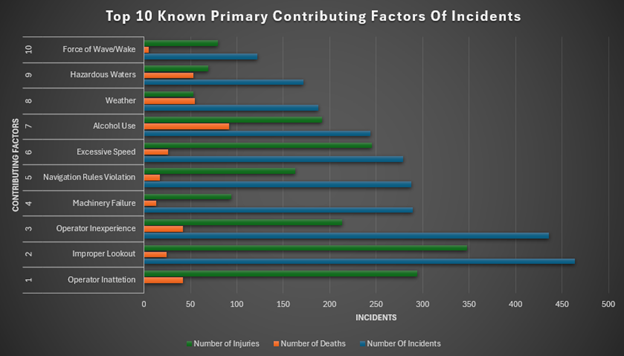
(2024 Recreational Boating Statistics- U.S. Department of Homeland Security/ U.S. Coast Guard)
Beyond these behavioral factors, machinery failure consistently ranks among the top five contributing factors to accidents. This is a critical area where human error and mechanical issues can intertwine, creating a dangerous and complex scenario.
The Role of Forensic Engineering:
Companies like CED Technologies, Inc., possess the expertise to meticulously analyze boating accidents involving potential mechanical failures. Their team of marine experts, many with backgrounds as engineering officers, conduct thorough field investigations, reconstruct accidents, and analyze failed marine equipment. They utilize advanced tools and techniques to assess component failures, analyze hull damage, and reconstruct the sequence of events leading to an accident. This detailed analysis provides critical insights for legal proceedings, insurance claims, and most importantly, for identifying potential safety improvements and preventing future incidents. By understanding the “why” behind equipment failures, forensic engineers at companies like CED Technologies contribute significantly to boating safety.
Charting a Safer Course: Tips for Your Next Boating Outing
Enroll in a Boating Safety Course: Gain essential knowledge about boat operation, navigation rules, emergency procedures, and legal requirements. Organizations like the U.S. Coast Guard Auxiliary and local boating clubs offer comprehensive courses.
Conduct Pre-Departure Checks: Before every outing, thoroughly inspect your boat, engine, safety equipment (i.e., life jackets, flares, first-aid kit, fire extinguisher, etc.), and ensure all systems are functioning correctly. Pay attention to fluid levels, battery condition, and the proper operation of lights and steering.
Be Aware of Weather Conditions: Check the forecast before heading out and be prepared for changing conditions. Postpone your trip if severe weather is predicted.
Practice Situational Awareness: Maintain a constant lookout for other vessels, swimmers, markers, and potential hazards. Avoid distractions like mobile phones and excessive conversation.
Obey Speed Limits and No-Wake Zones: Operate your boat at a safe and responsible speed, adhering to posted regulations.
Never Boat Under the Influence: Alcohol and drugs significantly impair your ability to operate a boat safely. Designate a sober operator.
Wear a Life Jacket: Encourage everyone on board to wear a properly fitted life jacket at all times, especially children and non-swimmers. Life jackets save lives.
Maintain Your Boat Properly: Regular maintenance can prevent mechanical failures. Follow the manufacturer's recommendations for servicing your engine and other critical components. Consider consulting with qualified marine technicians for routine inspections and repairs.
Inform Someone of Your Float Plan: Let a responsible person know where you are going, who is with you, and when you expect to return. Also ensure you have reliable communication means on board. This could include cellphones, a VHF radio, or flares. Knowing how to use these devices and having them readily accessible can be life-saving in an emergency.
By acknowledging the contributing factors to the rise in boating accidents – both human and mechanical – and by actively embracing safe boating practices, we can collectively work towards reversing this trend and ensure that our time on the water remains a source of joy and recreation for all. Understanding the insights provided by forensic engineering firms like CED Technologies after an accident serves as a vital reminder of the importance of both responsible operation and diligent maintenance.