Shortcode Cleaner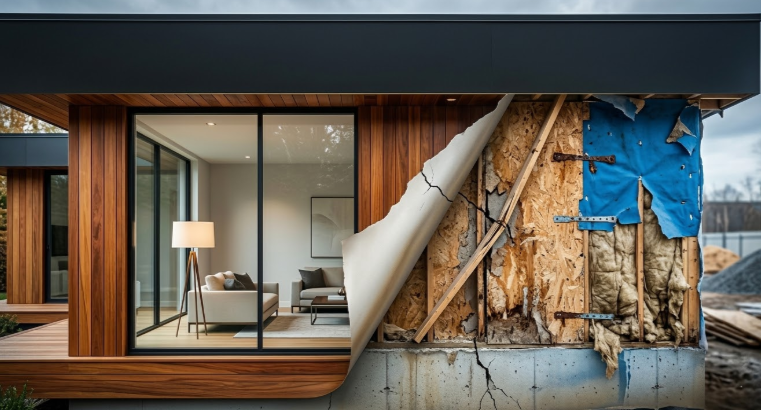
Imagine a client settling into a multi-million-dollar condo. The views are panoramic and the finishes are Italian marble. Yet, within two years, the ceiling bubbles, drywall cracks, and doors jam. This is the Luxury Paradox: premium marketing masking systemic flaws. For insurance adjusters and lawyers, these cases are becoming a primary litigation front in 2026 as bespoke dreams collide with the reality of mass-produced construction.
The Rise of the “Cookie-Cutter” Castle
To maintain margins amidst 2026’s labor shortages and material costs, developers increasingly rely on modular templates and “cookie-cutter” skeletons, even for luxury builds. While efficient, this model introduces systemic risk. A single engineering oversight or a poorly vetted pre-fab component is no longer an isolated incident; it is replicated across every unit in the development, turning a minor error into a multi-million-dollar class-action or subrogation claim.
Common Flaws in “Premium” New Construction
In these high-stakes environments, failures typically fall into three costly categories:
- Building Envelope Failures: The most prevalent issue. Complex, aesthetic facades (curtain walls, specialized stucco) often require expert installation. When rushed by unskilled labor, flashing and sealants fail, leading to hidden water intrusion, mold, and rot in a short period of time.
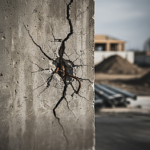
- Settlement & Structural Deficiencies: In the race to “to out” towers, concrete curing times or soil compaction may be compromised. This manifests as significant structural cracking, slab deflection, uneven floors, stress fractures revealing through finishes, misalignment of doors, glazing systems and interior partitions that “luxury” finishes cannot hide.
- Systemic Mechanical Failures: High-end HVAC and plumbing systems integrated into tight modular spaces are prone to installation errors. Poorly routed drain lines or inadequate ventilation often lead to catastrophic leaks and air quality litigation.
The Role of Forensic Engineering
When remediation fails and the “Luxury” Paradox leads to the courtroom, forensic engineers provide the technical bridge between a defect and a recovery. Their process involves:
- Origin and Cause Investigation: Utilizing non-destructive testing (moisture mapping, infrared thermography, and drone inspections) to look behind the marble and gold.
- Causation Analysis: Determining if the failure stems from a design defect (architectural liability), material substitution (developer liability), or faulty workmanship (subcontractor liability).
- Technical Advocacy: Translating complex engineering failures into clear, evidence-based reports that empower adjusters to set accurate reserves and lawyers to secure favorable settlements.
As mass-produced luxury continues to dominate the 2026 market, the gap between buyer expectation and reality will widen. Success for legal and insurance professionals depends on identifying these “template failures” and leveraging forensic expertise to pierce the veneer of luxury and reveal the underlying defects.