Shortcode Cleaner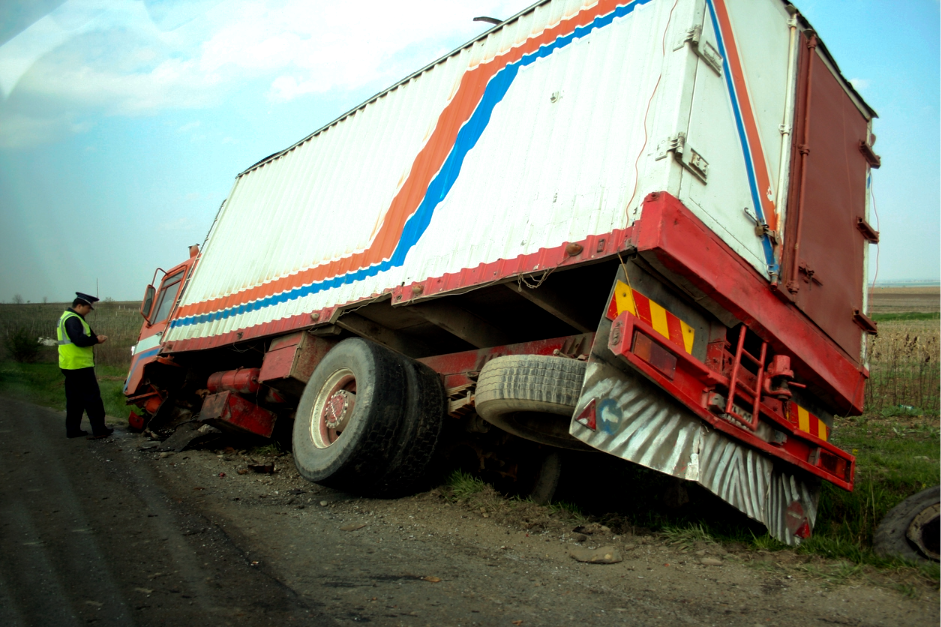
On the highway, a single second can be the difference between a routine trip and a nuclear verdict that puts an entire fleet at risk. For claims adjusters and legal teams, the aftermath of a commercial collision isn't just a high-stakes puzzle, it’s a battle of data versus guesswork.
While a police report provides a basic snapshot, it rarely explains the complex physics of momentum or mechanical lag that defines heavy trucking accidents. In today’s legal climate, shifting from speculation to scientific certainty is the only way to protect a company’s future. By reconstructing those final moments with 3D precision, we move past theories and into the realm of indisputable facts.
The Massive Disparity: Why Trucks Aren't Just Large Cars
The fundamental challenge in reconstructing trucking accidents is that a fully loaded tractor-trailer does not behave like a passenger vehicle. While a sedan might weigh 4,000 pounds, a fully loaded commercial rig can reach up to 80,000 pounds. This disparity creates a unique set of physical constraints. For instance, air brake systems, the standard for heavy trucks, suffer from brake lag, a delay of roughly half a second between the driver hitting the pedal and the brakes actually engaging. When traveling at highway speeds, that half-second translates to dozens of feet of travel before deceleration even begins.
Furthermore, load distribution plays a critical role in stability. A truck carrying a high center-of-gravity load or a shifting liquid cargo reacts differently to emergency steering inputs than an empty trailer. Forensic analysis must account for these variables, as a truck’s stopping distance can be longer than that of a car under the same conditions. Understanding these mechanical realities is essential for determining whether a driver acted reasonably or if the equipment reached its physical limit.
The Role of Forensic Engineering
When a major truck crash happens, the road needs to be cleared quickly to get traffic moving again. But once the vehicles are towed and the pavement is swept, how do we know what actually happened?
Forensic engineers use high-tech sensors to analyze the scene in 3D. This creates a digital map of the accident. We can then layer the truck’s own electronic control module data onto this map to see what the driver saw and how the vehicle moved in the seconds before the crash.
Instead of guessing, we use this data to reconstruct the truth, showing when a driver noticed a hazard and if they had enough time to stop.
So Why Does it Matter?
In the courtroom, the most debated element is often the driver’s reaction time. Forensic engineering bridges the gap between the mechanical data and human behavior. By analyzing the 3D reconstruction, experts can determine the Point of Possible Perception, the moment the hazard became visible, versus the Point of Actual Perception, when the driver recognized the danger.
Forensic evidence can identify if fatigue, distraction, or mechanical failure played a primary role. For the legal and insurance industries, this data-backed approach is the only effective shield against the emotional volatility of nuclear verdicts, ensuring that cases are decided on hard evidence rather than speculation.