Shortcode Cleaner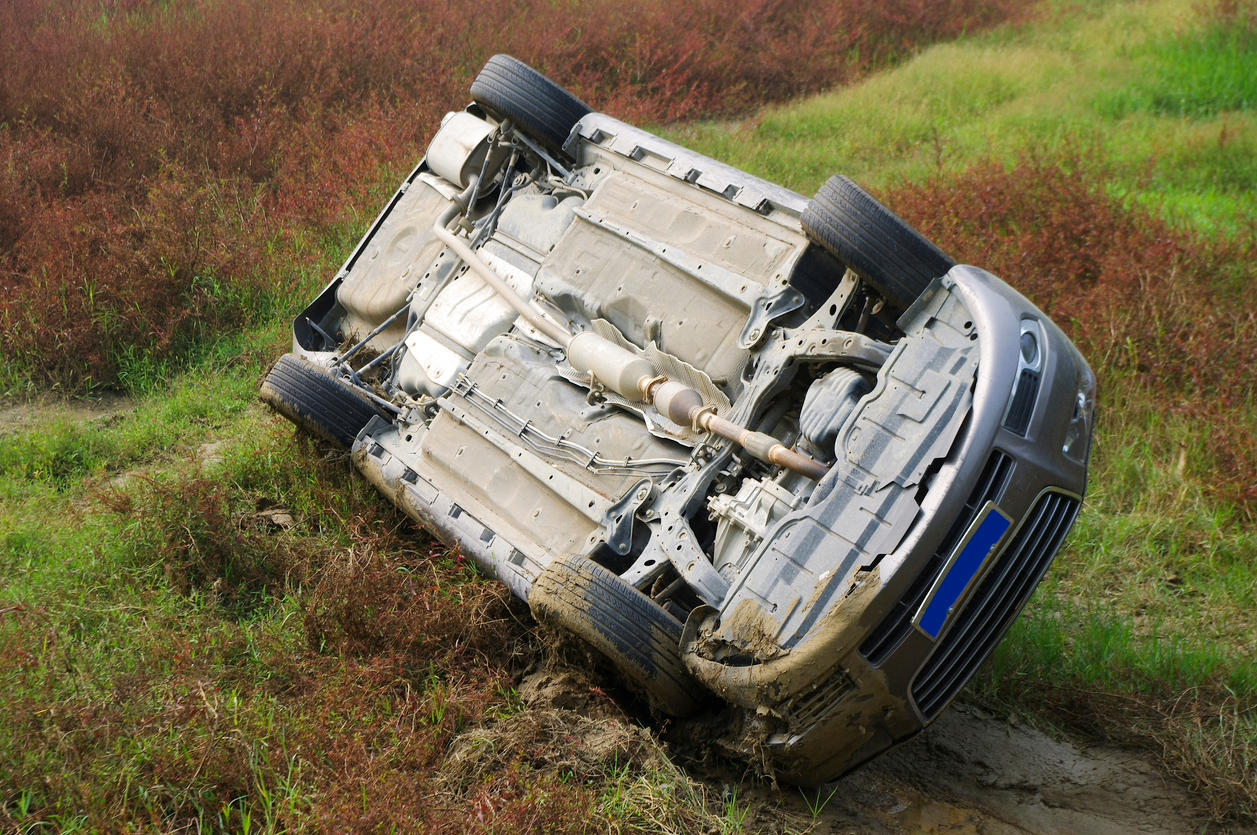
In the aftermath of a catastrophic highway accident, the visual of a multi-ton SUV or a commercial truck resting on its roof is more than just a scene of destruction, it is a data-rich forensic puzzle. For legal professionals and insurance adjusters, the central challenge is determining what exactly happened during an incident and then determining why it happened. Determining what occurred in rollover cases requires a reliable estimation of vehicle dynamics, vehicle dimensions, impact forces, and an understanding that vehicles can rollover due to being tripped, being struck by a tall vehicle, or due to an excessive steering maneuver.
Understanding the Mechanics: Tripped vs. Untripped
Forensic engineers categorize rollovers into two primary types, each carrying vastly different implications for liability and accident reconstruction.
Tripped Rollovers: A trip occurs when a vehicle’s lateral motion is suddenly interrupted by an external force that is low to the ground such as striking a curb, digging into soft soil, or impacting a guardrail. In these cases, our investigation focuses on road design, trip-point markers and the initial loss of control event such as a side impact.
Untripped Rollovers: An untripped rollover occurs due to the excessive centrifugal forces generated during a sharp turn which exceeds the vehicle's stability threshold. These can occur due to excessive steering while braking and are worsened for top heavy vehicles like loaded semi trucks or high center of gravity SUVs. Here, the investigation shifts heavily toward driver input, speed, and cargo distribution. An Excessive steer event can also be combined with a trip mechanism, combining these two types of rollovers.
Determining Fault: The Forensic Advantage
While vehicle design is a critical piece of the puzzle, forensic analysis often reveals that a rollover is the result of a complex interaction between a driver's behavior and the physical environment. From a human factors perspective, the reactive steering phenomenon is a primary culprit. When a driver encounters a sudden hazard, their instinctive, high magnitude swerve, combined with excessive braking can generate enough lateral acceleration to overcome the vehicle's stability, even on a flat dry surface without hitting a curb. This risk can be magnified in commercial trucking, when improper cargo loading creates a dangerously high center of gravity. In these instances a standard evasive maneuver that a passenger car might handle becomes a catastrophic tipping point due to the shifting weight of the load.
Moving away from the driver’s actions, the road itself can contain hidden dangers that turn a simple slip-up into a life-threatening crash. One major factor often used in legal cases is the soft shoulder effect. This happens when a car’s tires drift off the pavement and sink into soft dirt or gravel. The soft ground allows one side of the vehicle to lower, tipping the vehicle, and then the sunken ground trips the tires causing the vehicle to flip over.
Additionally, the way a road is built, specifically its banking or curve angle, plays a significant role in safety. On a well-designed curve, the road is tilted inward to help fight the outward momentum of a turning vehicle. If this banking is too flat or poorly maintained, the road fails to support the vehicle through the turn. In these situations, the road stops being a safe surface and becomes a cause of the rollover, shifting the blame from the driver's skill to the engineers or agencies responsible for the road’s design.
Turning Physics into Evidence
For the claims adjuster managing a high-exposure file or the attorney preparing for trial, the forensic engineer serves as the bridge between uncertain allegations and clear, scientific conclusions. By identifying the specific forces and attributes that caused a rollover, engineers at CED Technologies can provide the clarity necessary to assign fault. Whether the cause was an environmental trip or a high-speed maneuver, or both, the physics of the flip can be determined through careful examination and analysis of the physical evidence.