Shortcode Cleaner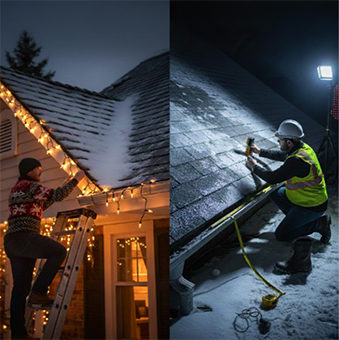
The festive season brings the holiday joy of twinkling lights, but for many homeowners, the annual tradition of hanging Christmas lights on the roof also brings a serious safety risk. Statistics show that thousands of people are injured each holiday season in decorating-related incidents, with falls from ladders and roofs being a major cause. Before you climb, it's essential to understand the hazards and the specialized expertise involved when accidents do happen.
Common Causes of Roof Falls
Roofs are inherently dangerous workspaces, and the act of hanging lights introduces several factors that can drastically increase the risk of a fall:
Slippery Surfaces: Even without rain or snow, roofs can be slick from dew, frost, or the accumulation of dust and debris. Many roofing materials, especially asphalt shingles, lose traction quickly when wet or icy.
Improper Ladder Use: The majority of falls occur while ascending, descending, or working from the ladder. Common mistakes include placing the ladder on uneven ground, failing to secure it, standing too high, and overreaching to hang lights instead of moving the ladder.
Hidden Hazards: Cracked, loose or deteriorated shingles, compromised eaves, or unstable gutters used for balance can give way unexpectedly. Ignoring the weather (working on wet or windy days) can significantly compound all these dangers.
Footwear and Distraction: Wearing inappropriate or slick-soled shoes, rushing, or focusing too intently on the lights can lead to a loss of balance and a tragic fall.
After the Accident: The Role of Forensic Engineering
When a serious slip and fall occurs, especially one involving potential premises liability or product failure, the highly specialized field of forensic engineering steps in to uncover the scientific truth of what happened. Firms like CED Technologies play a critical role in these investigations.
A forensic engineer's job is not to assign blame but to provide an objective, data-driven analysis of the accident scene, transforming complex technical issues into clear evidence.
CED Technologies' Role in Slip and Fall Investigations:
Scene Analysis and Documentation: Experts conduct detailed site inspections, often using 3D laser scanners to precisely document the roof, ladder position, and environment as they existed immediately after the fall.
Slip Resistance Testing: They use specialized tools, such as a Tribometer (like the English XL), to measure the actual coefficient of friction of the roofing material or the ladder rungs under simulated conditions (dry, wet, or icy).
Human Factors and Biomechanics: Experts review factors related to human interaction, evaluating if the design of the environment (e.g., lack of handholds, poor lighting) or the actions of the individual contributed to the fall. Biomechanical analysis may be used to determine the forces involved and whether the claimed injuries align with the mechanics of the fall.
Code and Standard Compliance: The investigation determines if the ladder, the roof structure, or the lighting installation methods violated any applicable building codes, industry standards, or manufacturer's safety warnings.
By synthesizing all this technical data, forensic engineers provide a scientifically sound conclusion on the root cause of the fall, which is invaluable for legal proceedings and for preventing future accidents.
Steps for a Safer Installation: Prevention is Key
Taking a few precautionary steps can drastically reduce your risk of a roof-related fall. Safety should always come before sparkle!
Inspect your equipment: Check ladders for loose rungs or damage. Inspect light strands for frayed wires or cracked sockets (use outdoor-rated lights).
Ladder safety: For every four feet of height, the base of the ladder should be one foot away from the wall. Ensure the ladder extends at least three feet above the roof edge and is secured at the top. When climbing or descending, always have three points of contact with the ladder (two hands and one foot, or two feet and one hand).Keep your center of gravity (belt buckle) between the ladder rails. Move the ladder frequently rather than leaning or stretching.
Roof Work: Never climb a roof when it is wet, icy, windy, or if you feel fatigued or dizzy. Choose slip-resistant shoes with good tread. Clean the soles before climbing the ladder. If you must step onto the roof, limit your movement and avoid walking upright on steep pitches. Use your hands and knees for stability.
Installation: Never use nails, screws, or staples, as they puncture and damage shingles and can lead to electrical hazards. Use non-marring plastic light clips that attach to gutters or the edges of shingles.
For many homeowners, the safest step is often the first one: know your limits and consider hiring a professional installer for decorations requiring rooftop work. Keep the holidays bright and safe!