Shortcode Cleaner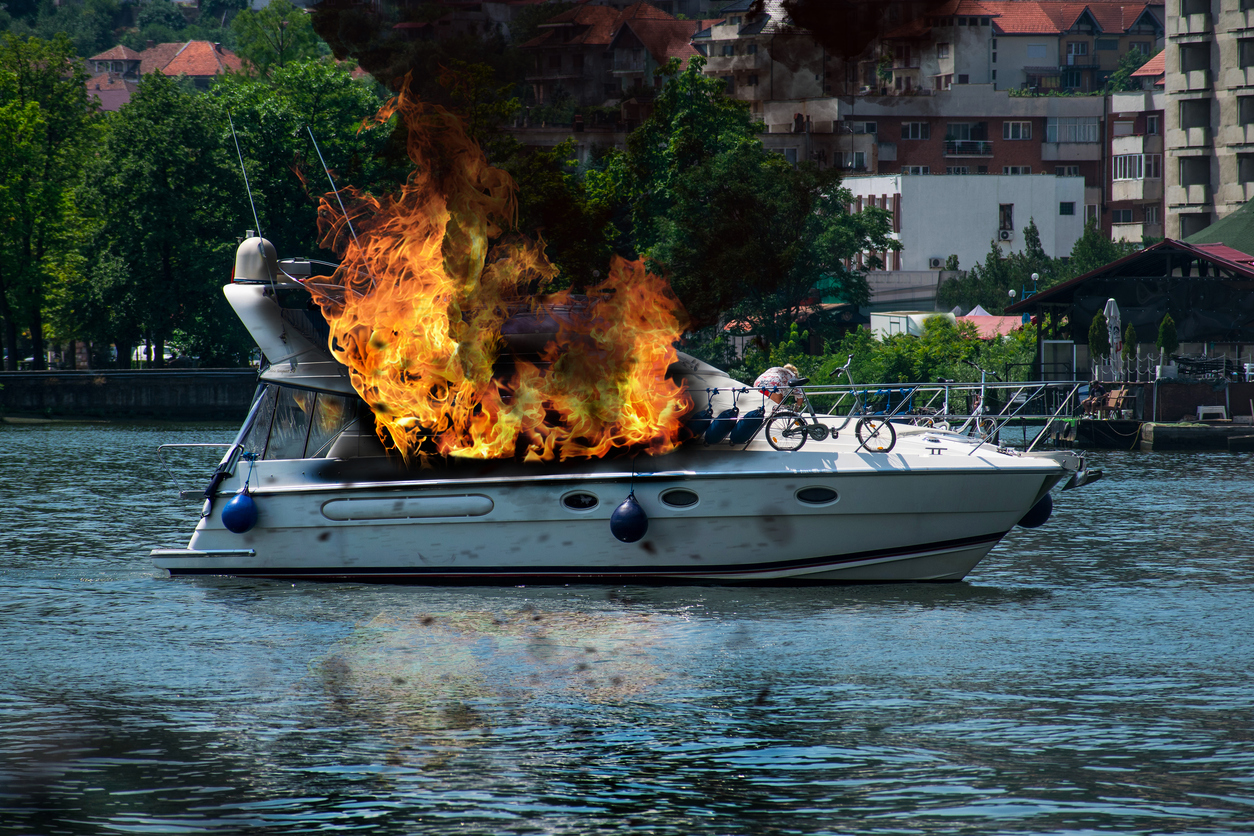
Every marine fire scene is a chaotic mess of finger-pointing. The boat manufacturer blames the aftermarket installer, the mechanic blames the owner, and the insurance companies are stuck caught in the middle. Trying to figure out who to hold accountable by just looking at a melted hull is impossible. Did the owner neglect the boat? Did a mechanic mess up a repair last week? Or did a manufacturer sell a defective product? In the high-stakes world of marine insurance and maritime law, you can’t rely on guesswork. To win a case or settle a claim fairly, you need undeniable proof before the evidence washes away. You need a definitive answer that cuts through the noise and stands up under intense courtroom cross-examination.
Common Causes of Maritime Fires
When a fire breaks out on the water, the underlying cause usually comes down to a few common culprits. Because boats constantly bounce around on waves and sit in corrosive saltwater, their internal systems take a beating. The most frequent cause is a failure in the electrical wiring; a single loose plug or a corroded wire can quietly overheat and ignite the surrounding fiberglass without ever blowing a fuse. Mechanical issues in the engine room are another major threat. A cracked fuel line can spray a fine mist of diesel onto a hot engine part, causing an instant flash fire. Even worse, if a boat's ventilation system fails, invisible gasoline vapors can trap themselves in the belly of the ship, turning the next turn of the ignition key into a violent explosion.
The Role of Forensic Engineering
At CED Technologies, our engineers go to work as technical investigators. The moment we arrive at the scene, or the salvage yard, our engineer immediately begins a systematic, layer-by-layer excavation of the wreckage. We trace the fire's burn patterns along the remaining structure, mapping out where the heat was most intense to pinpoint the exact origin of the blaze. Next, we look for physical clues left behind by the mechanical and electrical systems. Our engineers inspect the engine's fuel lines for signs of cracks, loose fittings, or vibration damage that could have sprayed fuel onto a hot exhaust. We pull the electrical panels and shore power plugs, looking closely at the wiring for localized melting or “arcing beads,” telltale signs that tell us where the fire had started and the defining areas of origin. By inspecting these components directly, CED engineers convert a ruined vessel into an objective map of what failed and why.
The Bottom Line
Ultimately, a boat fire is rarely just bad luck; it is almost always a question of liability. Whether the blame lies with a manufacturer’s defect, a lazy repair job at a shipyard, or operator negligence, the truth is buried in the debris. For legal and insurance professionals, partnering with a forensic engineer isn't about getting a dense science report, it's about getting the undeniable facts you need to protect your financial assets, successfully recover your losses, and close your file with absolute confidence.