Shortcode Cleaner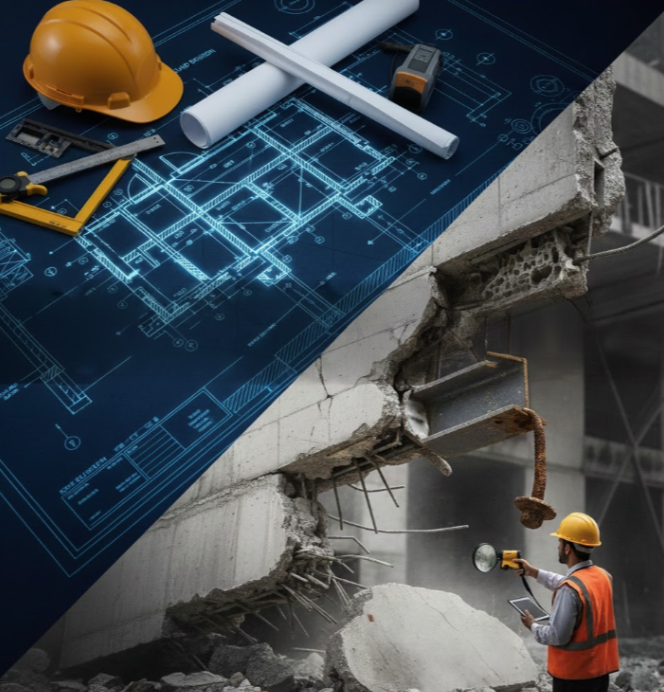
The integrity of any structure hinges on two critical factors: a sound design and quality execution. While a brilliant blueprint lays the foundation, it's the workmanship on site that determines whether the design translates into a safe and durable reality. When this process falters, the resulting breakdowns often lead to costly disputes and catastrophic failures. This article dives into common workmanship errors, from improper welding to poor concrete pouring while highlighting the importance of forensic engineering in uncovering the truth.
Common Workmanship Errors
Construction projects are intricate endeavors, and a single mistake can have a ripple effect. Three pervasive categories of workmanship errors frequently cause major problems:
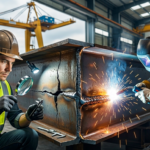
- Improper Welding: Welding is meant to create a bond stronger than the base materials themselves. However, common errors like inadequate penetration (a shallow, weak joint), porosity (pockets in the weld), and undercutting (grooves in the base metal) can severely compromise a structure's integrity. When a failure occurs, forensic engineers must determine if the fault lies in the weld itself, a task that often requires advanced metallurgical analysis.
- Incorrect Bolt Torque: The simple act of tightening a bolt is a precise engineering requirement. Under-torquing can lead to loose connections and structural instability, while over-torquing can overly stress the bolted connection or deform the surrounding materials. These hidden flaws are often only revealed after a failure, making their investigation a critical part of forensic analysis.
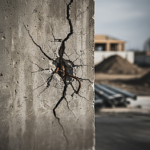
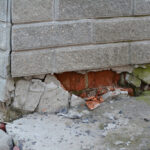
- Poor Concrete Pouring Practices: Concrete is the backbone of modern construction, but its strength is dependent on proper placement and curing. Errors like inadequate consolidation (leaving air pockets or “honeycombing”), excessive water content (which weakens the mix), and improper curing (leading to premature cracking) can drastically reduce the concrete's load-bearing capacity and long-term durability.
Inadequate Quality Assurance: The Missed Safety Net
The presence of persistent workmanship failures often points to a fundamental breakdown in the project's Quality Assurance (QA) and Quality Control (QC) systems. QA is the preventative process intended to verify that construction processes, such as achieving the correct weld penetration, specified bolt torque, or proper concrete consolidation, meet the required engineering standards before they are concealed or built upon. Inadequate training, insufficient inspection frequency, or a failure to enforce project specifications can all result in these critical errors slipping through the cracks. By allowing substandard work to be accepted, the construction team essentially forfeits the opportunity to correct issues in real-time, escalating a simple workmanship error into possibly a severe structural defect that can only be diagnosed through costly, post-failure forensic investigation.
The Role of Forensic Engineering: Unraveling the Breakdown
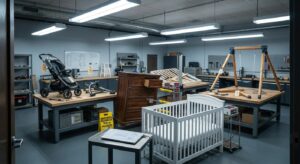
When a construction failure occurs, forensic engineering acts as the crucial investigative arm. These specialists are tasked with dissecting a failure to pinpoint its root cause. Their work involves:
- Failure Analysis: Using a combination of visual inspection, non-destructive testing (NDT), and laboratory analysis to collect and analyze evidence.
- Root Cause Identification: Determining whether the failure was due to design flaws, material defects, or, most commonly, workmanship errors. This involves a detailed, scientific reconstruction of events.
- Expert Testimony: Providing unbiased, technically sound opinions and testimony in legal proceedings to help resolve disputes and assign liability.
Conclusion
The journey from a blueprint to a finished building is a complex collaboration. When the workmanship falls short of the design's intent, the consequences can be dire. The vital role of forensic engineering, and the expertise of firms like CED Technologies, ensures that when breakdowns occur, the intricate web of causation is unraveled. This not only resolves disputes but also provides crucial lessons for a safer and more resilient future for the construction industry.