Shortcode Cleaner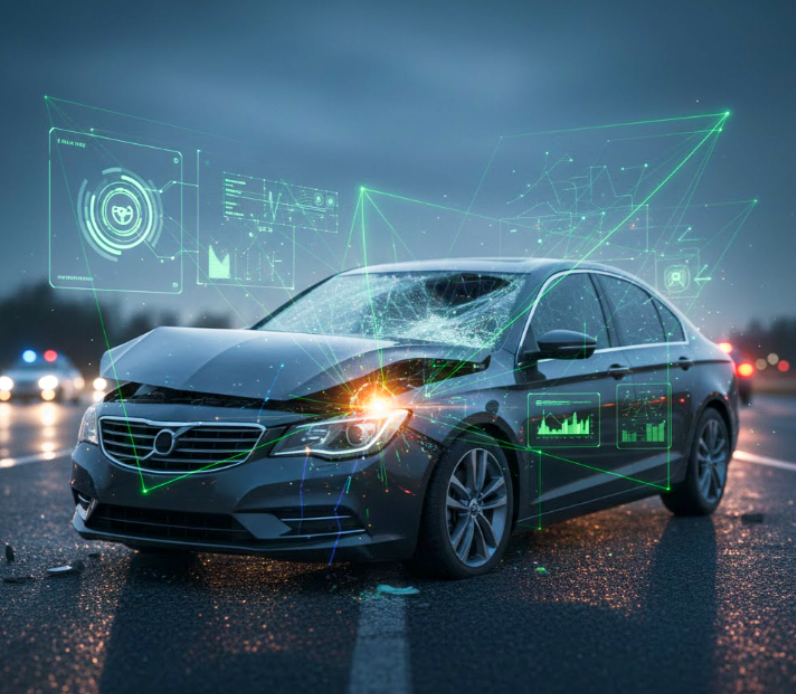
In the courtroom, the phrase “I think” is helpful, but the phrase “the data shows” is definitive. For decades, accident reconstruction relied on interpretations of skid marks and shattered glass, the echoes of a crash. Today, the vehicle itself is a living witness. With Advanced Driver-Assistance Systems (ADAS) now standard in over 50% of new vehicles, and recording of that data becoming prevalent, the traditional “he-said, she-said” liability battle is becoming obsolete.
Understanding ADAS: Your Silent Co Pilot
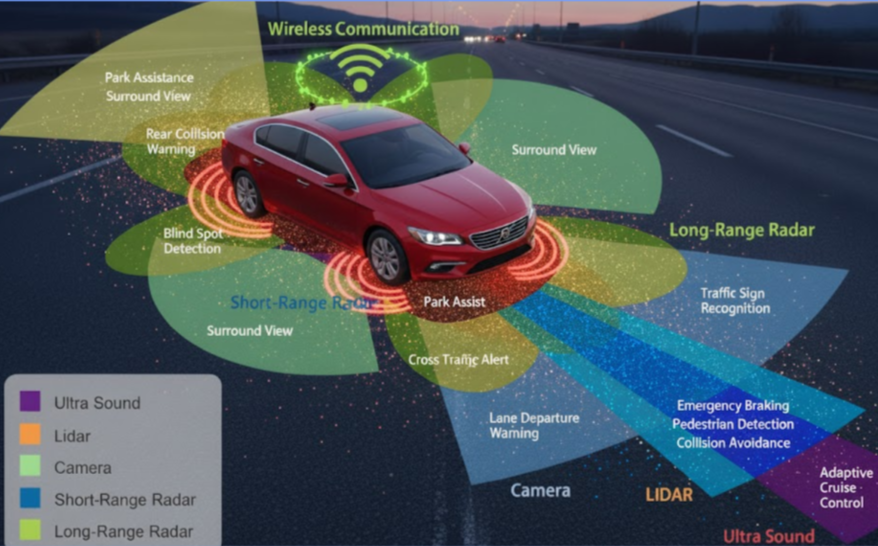
Advanced Driver Assistance Systems (ADAS) are a suite of electronic technologies designed to assist drivers and enhance vehicle safety. These systems use a complex array of sensors, including LiDAR, radar, and high-resolution cameras to perceive the vehicle's surroundings and either warn the driver of danger or take autonomous action to try and prevent a collision. Computer systems on vehicles are capable of storing the data provided by ADAS when a serious crash occurs. While traditional systems treat this data as a hidden ‘black box' for post-accident investigation, Tesla is evolving the platform by turning raw telemetry into a visible, high-definition record for the owner.
In fact, some cars are now so advanced that Tesla is embedding Supplemental Enhancement Information (SEI) directly into your video stream. At a glance, the car can display your speed, gear state, pedal position, steering wheel angle, and blinker status. It even syncs complex variables like Autopilot engagement, precise GPS location, and tri-axial acceleration (G-force) directly onto the video, providing a complete, forensic-level narrative of every drive.”
Common ADAS features include:
Automatic Emergency Braking (AEB): Helps detect an imminent forward collision and applies the brakes if the driver fails to react.
Lane Keeping Assist (LKA): Monitors Lane marking and provides steering input to keep the vehicle centered.
Adaptive Cruise Control (ACC): Automatically adjusts vehicle speed to maintain a safe following distance from the car ahead.
Blind Spot Detection: Alerts the driver to vehicles in adjacent lanes that are not easily visible in mirrors.
Safety vs. Liability: A Complex Interplay
While these technologies have significantly reduced accident frequency, they have simultaneously clouded the waters of legal liability. When a collision occurs in a tech heavy vehicle, the investigative focus shifts from simple human error to a complex interplay between man vs machine. Forensic engineers must now answer critical questions.
System Status: Was the ADAS active, or had the driver manually disabled it?
The Override Question: Did the driver attempt to steer or brake against the system's intervention?
Mechanical Fidelity: Did the sensors fail, or were they obscured by debris, poor maintenance, or environmental factors?
The Role of Forensic Engineering
Unlike a standard police report, a forensic engineering investigation applies scientific principles and specialized technology to perform a “digital autopsy” of the crash.
Forensic engineers utilize Crash Data Retrieval (CDR) tools to download information from the vehicles event data recorder and the ADAS control modules. This data provides a second-by-second account of steering angle, brake pressure, and sensor inputs leading up to the impact. By correlating this digital data with physical evidence like vehicle crush profiles and site geometry, engineers can reconstruct the sequence of events with mathematical precision.
As vehicles move closer to full autonomy, the line between driver responsibility and system performance will continue to blur. In this high stakes’ environment, the expertise of firms like CED Technologies ensures that the “living witness” of the vehicle is heard, clearly turning raw data into the impartial truth essential for justice.