Shortcode Cleaner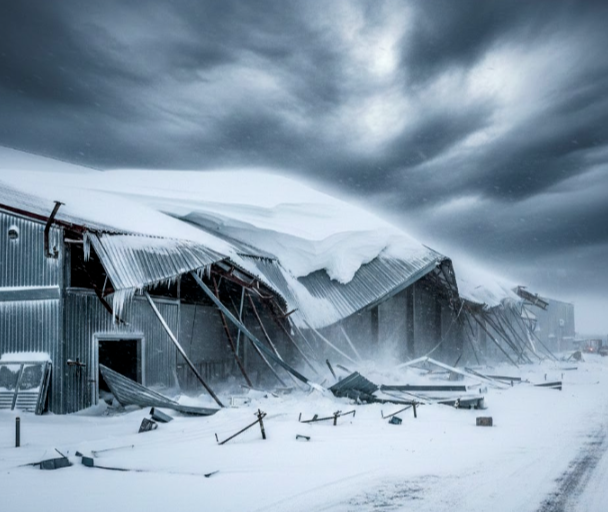
Snow doesn’t just sit on a roof, it drifts, piles, and exerts uneven pressure based on the invisible hand of aerodynamic loading. In the world of insurance defense and construction law, identifying this smoking gun is the difference between a covered loss and a subrogation opportunity. Our forensic team investigates the intersection of wind physics and structural integrity to pinpoint exactly why a roof failed, and who is ultimately responsible.
The Hazard: The Lethal Weight of Uneven Snow
The primary danger in structural engineering isn't necessarily the total volume of snow, but how that snow is distributed. For standard roofs a balanced load is often the baseline for the strength of the materials, while unbalanced loads are the stress test for the stability of the entire system.
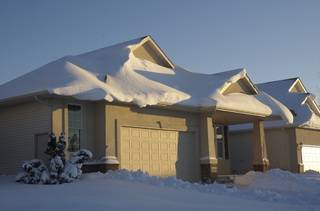
Leeward Drifts: As wind carries snow over a roof ridge, the air pressure drops on the downwind, leeward side. This can cause snow to drop out of the wind stream, creating massive, heavy drifts that can outweigh the design capacity of the trusses.
Parapet Walls and Obstacles: Any vertical projection, can act as a snow fence. These aerodynamic traps create localized surcharges that can be heavier than the surrounding snowpack.
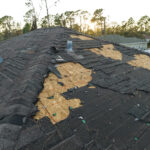
The Sideways Failure: Most roof trusses are incredibly strong vertically but vulnerable to lateral instability. When one side of a roof is buried in a six-foot drift while the other side is swept bare, the resulting unbalanced load creates a torque that can cause trusses to buckle sideways, potentially leading to a progressive domino-like effect collapse.
Protective Measures: Mitigating The Risk of Snow Related Failure
While you can't control the wind, you can manage how your building interacts with it. Both homeowners and business owners can take proactive steps to prevent aerodynamic loading from turning into a structural catastrophe. To safeguard a property against the mechanics of snow drifting, owners should prioritize a strategy of inspection and maintenance.
Inspection: Begins with a periodic check of residential attic trusses for signs of bowing or cracking, while commercial owners should invest in professional structural audits for flat roofs where drifting is most aggressive.
Maintenance: Homeowners can use a snow rake to clear reachable eaves, but business owners must contract professional snow removal teams equipped to handle the complexities of height and weight distribution.
The Technical Angle: Reconstructing the Event:
When a roof fails, forensic experts don't just guess; they “rewind” time using three main steps. Checking the Weather's “Fingerprints”: Experts look at the local weather records to understand the exact type of snow that fell. Not all snow is created equal.
The Weight: Was it heavy, wet snow, or light and fluffy powder?
The Stickiness: Did it melt and refreeze? Ice acts like glue, holding snow in places it shouldn't be, which adds weird pressure to the roof.
The Wind: Engineers would look for the max wind speed recorded on the day of the collapse.
Instead of building a physical model, engineers use computers to create a Digital Twin of the building. This model allows engineers to see exactly where the snow would have landed. This helps them find “hot spots” where the weight was likely too much for the beams to handle. Every building is designed to hold a certain amount of weight. Engineers use formulas to calculate how much stress the roof could handle versus what it actually faced.
When the weight of winter leads to structural failure, the “why” is rarely found in the total snowfall, but in the complex physics of how that snow moved. Forensic investigation bridges the gap between a chaotic weather event and a clear technical explanation, identifying whether a collapse was an unavoidable act of nature or a result of design and maintenance deficiencies. At CED Technologies, if you are navigating a complex property loss or construction dispute, ensure your case is built on a foundation of scientific certainty.