Shortcode Cleaner

Modern residential living is increasingly interconnected. From smart thermostats and automated security hubs to hardwired home automation modules and automated water shut-off valves, modern homes rely heavily on the Internet of Things (IoT) to enhance convenience, security, and efficiency.
The components of Smart Houses are interconnected using a Local Internet (a.k.a. Local Area Network, LAN) and is also marketed by AT&T as Internet of Things (IoT). Compatible smart devices include light bulbs, thermostats, locks, security cameras, doorbells and automated water shut-off valves. Smart Home typically includes hubs for assistants such as Alexa and Siri for voice-controlled commands.
However, when a smart home device fails, resulting in a catastrophic multi-story water leak or an uncontained electrical fire, the resulting property damage and liability claims are rarely straightforward.
For insurance adjusters, property owners, and legal counsel representing both defense and plaintiff interests, these complex claims present a maze of potential multi-party liabilities. Was the incident caused by a manufacturing defect in the hardware component, an improper integration or installation error by a low-voltage contractor, a software or firmware glitch, or an unforeseen user override? Unraveling the root cause requires a meticulous forensic engineering investigation that bridges electrical engineering, software analysis, and physical evidence recovery.
The Anatomy of an IoT Failure: Water Damage and the Smart Valve
Consider a common scenario: a high-end residential property sustains hundreds of thousands of dollars in water damage after a bathroom supply line bursts. The home was outfitted with an integrated smart water shut-off system designed to detect anomalous flow and automatically close the main valve. Yet, the system failed to trigger, or it triggered too late.
When evaluating liability, our engineers look beyond the physical plumbing failure to examine the digital and electrical chain of custody:
- Sensor vs. Hub Communication: Did the remote moisture sensor successfully transmit a radio frequency (RF) or Wi-Fi alert to the central hub, or did signal attenuation through building materials cause packet loss?
- Firmware and Logic Analysis: Was the failure caused by a software bug or an unpatched firmware update that corrupted the device’s automated decision-making logic?
- Power Supply Integrity: Did a transient voltage surge or a momentary power outage disable the hub or valve actuator right when it was needed most, and was proper surge protection installed?
Electrical Overload and Smart Device Fires
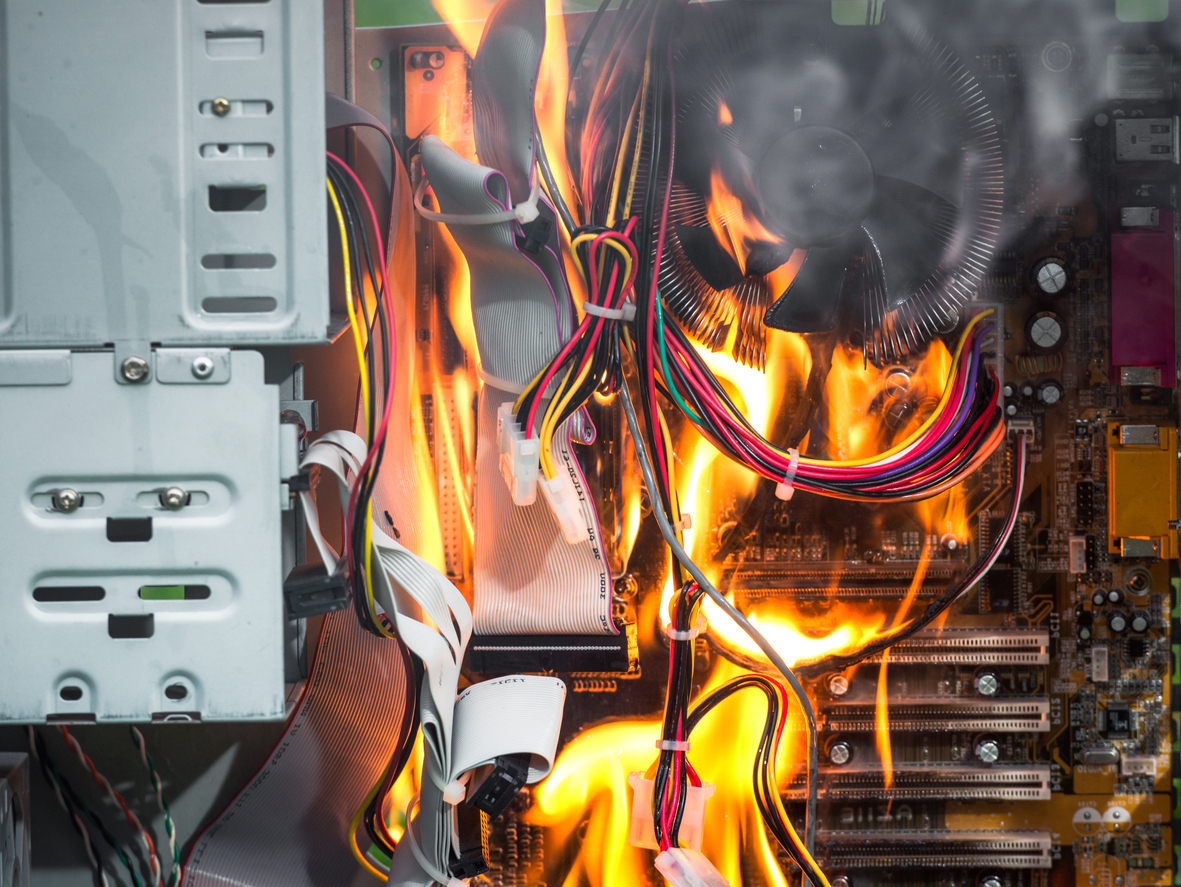
On the flip side, smart home tech integrated directly into a home's electrical grid, such as smart switches, automated dimmers, or hardwired appliance control modules, introduces severe thermal and fire risks if improperly rated or manufactured.
Unlike traditional mechanical switches, smart switches maintain a continuous low-level electrical draw to power their internal radios and microcontrollers. When these components experience internal short circuits, component degradation, or poor thermal dissipation within a cramped electrical box, localized heating can quickly lead to thermal runaway and structural ignition.
In forensic fire investigations, identifying the area of origin and the point of origin is only the first step. Our electrical and materials engineers dissect the remains of the device to determine:
- Component-Level Defect: Did a substandard capacitor, undersized relay, or faulty circuit board trace fail under normal operational loads?
- Installation and Load Mismatch: Was the smart device installed on a circuit exceeding its electrical rating, or was it improperly wired without a neutral wire, forcing unsafe current paths?
- Ecosystem Compatibility: Did interactions between disparate third-party smart home platforms send continuous, erratic switching commands that overheated the physical relay?
Navigating Multi-Party Litigation and Subrogation
Because smart home ecosystems involve a web of stakeholders—including original equipment manufacturers (OEMs), component suppliers, firmware developers, low-voltage installation contractors, and DIY homeowners, subrogation recovery requires definitive, objective technical evidence.
At CED Technologies, our multidisciplinary team combines electrical engineering, materials science, and digital evidence analysis to objectively evaluate liability for both defense and plaintiff counsel. By isolating the point where physical hardware, electrical current, and software logic intersected, we help our clients cut through the complexity and establish the true cause of failure.