Shortcode Cleaner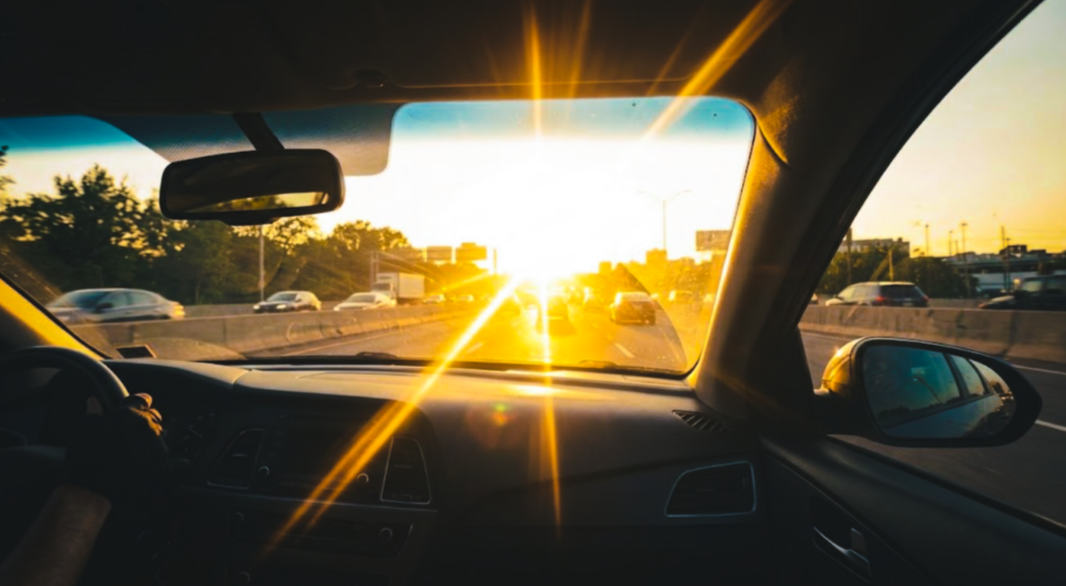
Have you ever heard the saying; I just couldn't see them, the sun was blinding? For claims adjusters and trial lawyers, this is the ultimate nature made me do it defense. It’s framed as an unlucky twist of fate, a split second where the universe hit the high beams and the driver became a passenger. But in the high-stakes world of forensic engineering, we don't buy into bad luck. We look at the math.Sun glare isn't a ghost; it’s a measurable, foreseeable physical event. When a driver claims they were blinded, we aren't interested in how bright they felt the sky was. We’re interested in the hard geometry of the crash: the exact angle of the sun, the specific blind sectors created by the vehicle’s frame, and whether a reasonable person could have, and should have, seen through the haze.
How Glare Actually Highjacks the Driver
Sun glare doesn't just bother a driver; it physically degrades their ability to process the road. In forensic terms, we look at two specific phenomena that lead to collisions:
- Veiling Luminance: This is when stray light scatters across the windshield (often worsened by dust, pits, or interior dashboard reflections). It creates a veil of brightness that washes out the contrast of objects like pedestrians or brake lights, making them effectively invisible.
- Light Adaptation: The process by which the human eye adjusts from low-light dark conditions to high-light bright environments. When moving from shade (like a tunnel or under a bridge) into direct, low-angle sunlight, the human eye requires several seconds to adapt.
The Forensic Deep Dive: Beyond the Eyewitness
When a case hinges on visibility, forensic engineering replaces “I think” with “I know.” We reconstruct the visual environment using a multi-layered approach:
- Solar Retro-Calculation: Using the exact GPS coordinates and the time of impact, we map the sun’s Azimuth (horizontal position) and Elevation (vertical height). This tells us if the sun was truly in the driver's field of vision or blocked by the vehicle’s roofline.
- A-Pillar Geometry: Modern cars have thick structural pillars for safety, but these create “blind sectors.” We calculate if the glare synchronized with these pillars to create a “super-blind spot” that swallowed the target object.
- The H-Point Analysis: We use the driver’s physical height and seat position (the Hip Point) to determine their exact eye level. This allows us to prove whether a standard sun visor, if deployed, would have successfully mitigated the glare.
Mitigation: What a “Reasonable Driver” Should Have Done
From a liability standpoint, “the sun was bright” isn't a defense if the driver failed to use the tools at their disposal. So what should a reasonable driver do in a situation like this?
- Visor Deployment: Was the sun at an angle where the visor could have blocked it? If the sun was at a certain elevation and the visor was up, that’s a failure to mitigate.
- Speed Adjustment: A driver blinded by glare should slow down and increase following distance. We use black box (EDR) data to see if the driver maintained cruising speed despite the visual obstruction.
- Maintenance: A dirty or pitted windshield significantly amplifies glare. We examine vehicle conditions to see if poor maintenance turned a manageable glare into a “disability glare” event.
The Bottom Line
Environmental factors aren't just data points; they are lived experiences. Whether it’s the blinding glare as the sun begins to set during an evening commute or the sudden onset of a storm, we replace subjective memory with scientific precision When the visual record is indisputable, the path to a fair outcome becomes clear.