Shortcode Cleaner
The Science & Forensics of Thermal Runaway in Consumer Products
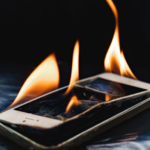
When a residential fire claim hits or a severe personal injury lawsuit alleges a “spontaneous battery explosion” the difference between a swift subrogation recovery and a total payout hinges on understanding a single chemical domino effect: Thermal Runaway. What begins as a microscopic manufacturing flaw, a dropped device, or a $5 unbranded charger can rapidly turn a common household item into an incendiary torch within seconds, leaving behind little more than charred debris and complex liability disputes.
Understanding the Chain Reaction: What causes Thermal Runaway?
To evaluate claims involving modern electronics, attorneys and adjusters do not need complex thermodynamic equations—they simply need to understand the physical sequence of a cell failure. A lithium-ion battery cell is essentially a highly concentrated energy storage package. Inside, a microscopic plastic layer (the separator) keeps the positively charged cathode and negatively charged anode apart while liquid electrolyte allows ions to flow.
Thermal runaway occurs when an internal fault creates heat faster than the battery can dissipate it into the surrounding environment. As temperature rises, a self-sustaining chemical feedback loop triggers.
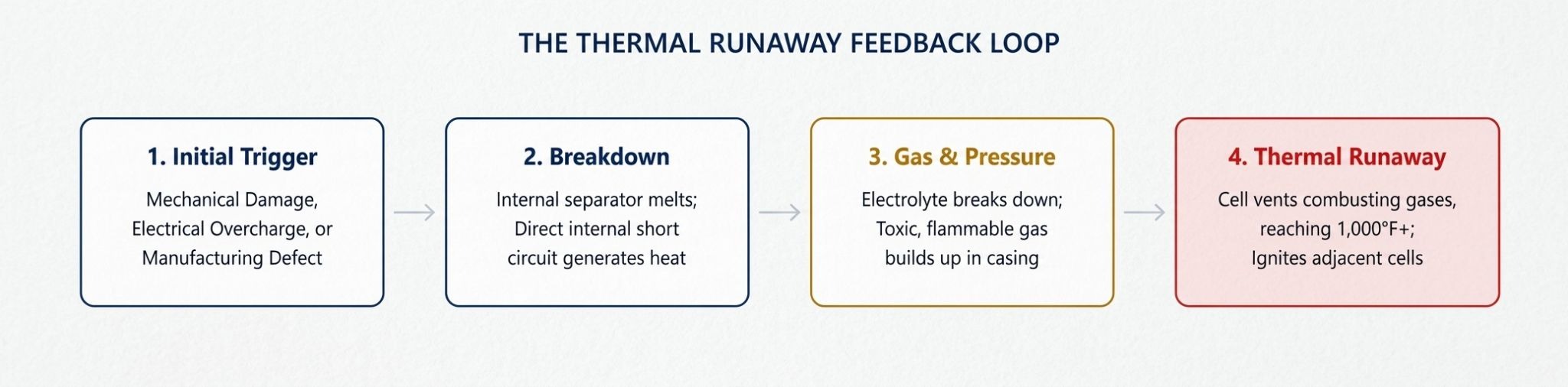
The three primary root causes behind this physical failure sequence are:
- Mechanical Abuse: Punctures, severe drops, or crushing forces deform the internal battery casing, piercing the delicate separator film and initiating a direct internal short circuit.
- Electrical Overstress: Overcharging, using uncertified aftermarket chargers, or exposure to high external voltage forces lithium ions into unwanted metal plating, eventually shorting the cell.
- Manufacturing Defect: Microscopic metallic debris trapped inside during factory production or poor internal winding can take months or years to gradually breach the separator during routine use.
The Most Common Consumer Products in Litigation & Claims
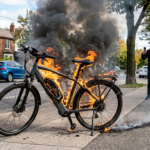
Micro-Mobility Devices- Devices such as e-bikes, scooters, electric powered golf carts that contain high-capacity battery packs exposed to severe road vibration, water intrusion, and cheap replacement chargers make these the leading source of major structural property fires.
Vaping Devices & E-Cigarettes- Often powered by removable cells without protective circuitry. Loose batteries shorting in pockets against keys or coins cause catastrophic burns and localized fires.
The Role of Forensic Engineering
When a battery fire occurs, the device itself is often heavily charred or completely destroyed. For claims adjusters and legal counsel, establishing liability hinges on a single critical question: did an internal defect cause the battery to burst into flames, or was the battery simply a victim of an external fire? Forensic engineers answer this by utilizing advanced diagnostic tools and scientific methodology to reconstruct the failure:
Scene & Debris Reconstruction: Mapping burn patterns and electrical arc damage ensures the fire actually originated inside the device rather than from nearby outlets or appliances.
Micro-CT X-Ray Scanning: Experts can non-destructively peer inside melted, charred battery cells to inspect internal alignment and pinpoint microscopic short circuits without disturbing fragile evidence.
Metallurgical & Electron Microscopy (SEM): Scanning Electron Microscopy analyzes internal metal current collectors to determine whether failure was caused by internal shorting or intense external heat.
Battery Management System (BMS) Recovery: Extracting data from surviving circuit boards can reveal crucial historical records, including overcharging events, voltage spikes, and operating temperatures.
Why Choose CED Technologies?
When complex battery claims arise, vague speculation won't hold up under legal scrutiny. At CED Technologies, our multidisciplinary team of licensed Professional Engineers deliver the objective, scientifically backed analysis your case requires.
Since 1987, CED has provided trusted failure analyses, origin and cause investigations, and expert witness testimony for insurance carriers and attorneys nationwide. We don't just assess the damage; we provide clear, reliable opinions built to withstand courtroom challenges and give you complete confidence when evaluating liability, subrogation, or defense strategies.