Shortcode Cleaner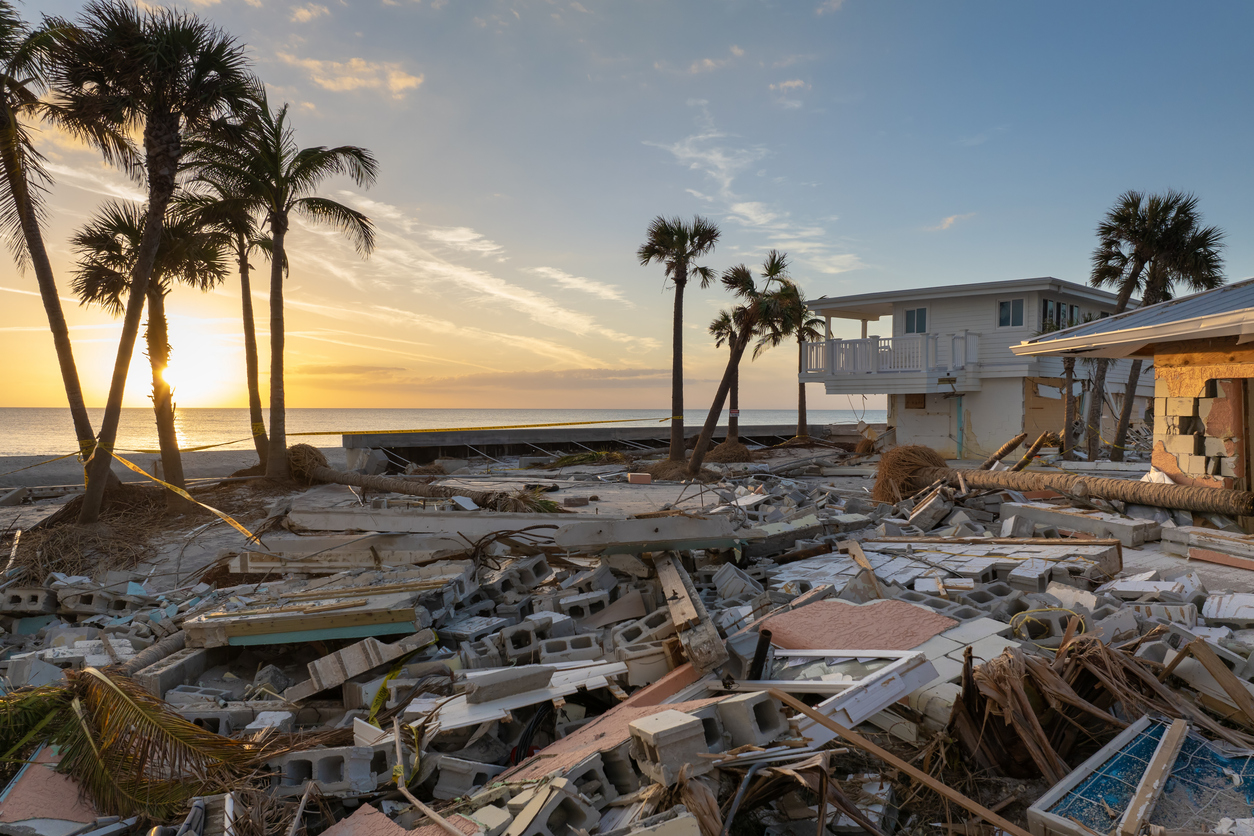
When the howling winds die down and the floodwaters recede, a secondary storm begins for insurance companies, independent adjusters, and legal teams. Millions of dollars in property damage claims hinge on a single, deceptively simple question: What exactly caused this damage? In the high-stakes arena of hurricane property damage, forensic engineering is the ultimate tool for converting chaotic destruction into objective, legally defensible truth.
The Anatomy of Hurricane Damage: Wind vs. Water
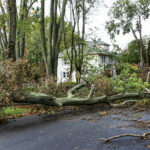
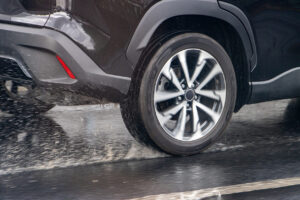
The most contentious battleground in hurricane litigation is the differentiation between wind damage and water damage. Storm surges and rising bodies of water can do a great deal of flooding damage, frequently in the absence of significant wind. Many standard policies cover wind damage, but do not cover flood damage, which commonly requires a separate policy.
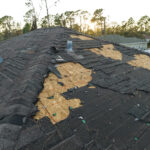
With distinct policy exclusions, deductibles, and coverages riding on the outcome, insurance professionals and legal practitioners require an airtight causal analysis. Forensic engineers approach a battered structure much like a crime scene, utilizing structural mechanics, meteorology data, and material sciences to reconstruct the exact sequence of failure. Wind damage leaves a distinct trail: upward lifting forces, asymmetric panel peel, and structural framing deflected away from the windward face. Conversely, rising floodwaters and storm surges exert massive lateral forces at ground level, often displacing structures from their foundations cleanly or leaving uniform, horizontal waterlines and scour patterns.
In the wake of a hurricane, forensic engineers determine whether building envelope failures or other damage discovered stems from direct storm causation or pre-existing maintenance defects by examining specific material clues. While recent environmental loads leave behind clean, unweathered concrete fractures, fresh wood splintering, and localized impact marks, long-term structural neglect is exposed by rusted fasteners, rotted decking, historical efflorescence, and dirt-filled cracks. By analyzing these things, conducting microscopic material analysis, and reviewing available building maintenance and repair histories, engineers provide adjusters and legal counsel with the definitive evidence needed to accurately distinguish between an unavoidable “Act of God” and systemic, long-term maintenance neglect.
The Role Of Forensic Engineering
Modern forensic engineering goes far beyond a clipboard and a flashlight. In the immediate aftermath of a catastrophe, access to safe, physical inspection sites may be restricted or structurally hazardous. Engineers utilize advanced technology to collect data that can withstand aggressive cross-examination in court:
High-Definition 3D Laser Scanning (LiDAR): Captures millions of data points to document structural deformation, lean, and global displacement down to the millimeter before demolition or emergency stabilization occurs.
Drone-Based Aerial Photogrammetry: Safe, comprehensive mapping of complex commercial roofs and debris fields, providing high-resolution visual evidence of directional damage patterns.
The Final Analysis
In the wake of a major hurricane, the pressure to close files quickly is immense. However, rushed adjustments and superficial evaluations frequently lead to prolonged litigation, bad-faith claims, or missed subrogation opportunities. A comprehensive, independent forensic engineering report acts as an anchor in the storm. It provides insurance adjusters with the technical clarity needed to pay exactly what is owed under the policy, and equips legal counsel with an authoritative, science-backed narrative that commands respect in negotiations or before a jury. When the next hurricane makes landfall, the difference between an expensive legal battle and a definitive, fair resolution lies in the precision of forensic engineering.