Shortcode Cleaner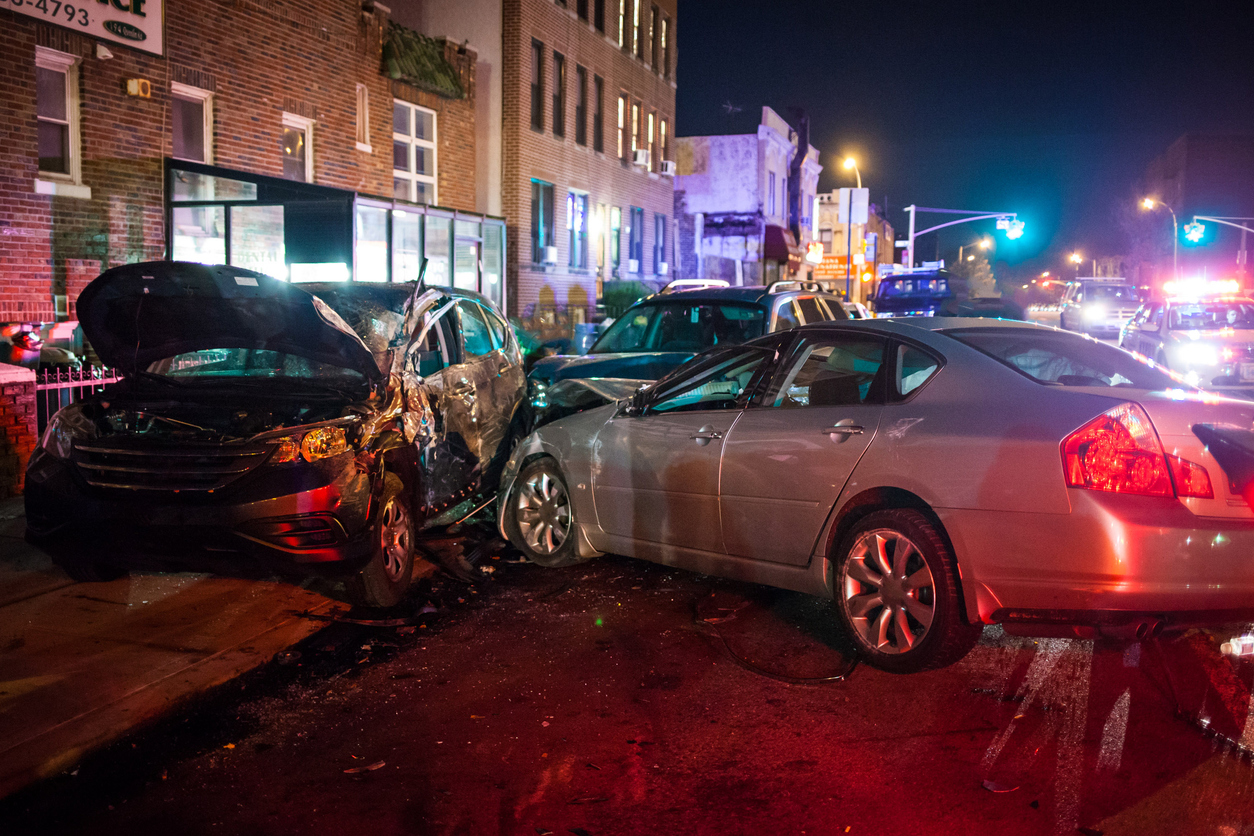
It is 11:30 PM on a highway with rolling hills. A driver is cruising along at the posted speed limit. As they come over a crest, a disabled vehicle sits directly in their lane with its lights off. The driver slams on the brakes, but it is too late.
When a rear-end collision or multi-vehicle crash happens after dark, it is easy for everyone involved to jump to conclusions. A driver might claim the other car appeared out of thin air, while investigators, insurance companies, or injured parties might assume the driver behind must have been distracted. On paper, you have a major wreck with two completely conflicting stories. But humans cannot avoid what they physically cannot see.
In nighttime accidents, finding the truth requires asking one core question: “When was it actually possible for a human being to see the hazard ahead?” That is where CED Technologies steps in. Our forensic engineers use advanced accident reconstruction, to bring objective, unbiased clarity to a case to show exactly what happened.
Day vs. Night: The Reality of Roadway Lighting
Determining fault in a nighttime crash can be different than evaluating a daytime accident. When the sun goes down, a driver's visual environment changes drastically. There are three main lighting factors which must be evaluated and understood in order to determine what really happened.
Headlight Limits vs. Daylight: In the daytime, the sun illuminates everything equally, giving drivers a massive field of view. At night, a driver is entirely dependent on headlights, which provide a drastically reduced field of illumination when compared to daylight. They are designed to point down and slightly to the right to avoid blinding oncoming traffic. This means a stalled car, a stray mattress, or a blacked-out vehicle can remain completely hidden in the darkness until a driver has little or no opportunity to react.
The Contrast Problem: In daylight, the human eye spots hazards instantly because objects stand out clearly against their backgrounds. At night, our ability to see contrast drops off a cliff. Dark-colored vehicles blend into the asphalt and the surrounding darkness. Furthermore, sudden glare from oncoming high beams, bright streetlights, or even lights reflecting off rain soaked pavement can momentarily blind a driver or camouflage a vehicle preventing driver recognition.
Conspicuity (How Something Captures Attention): During the day, a car is highly noticeable. At night, its visibility depends entirely on its reflectivity. A car with its hazard lights blinking is highly noticeable. A broken-down car with a dead battery is without lights, and has almost zero visibility. Our team determines when a vehicle changes from an unidentifiable shadow into a recognizable object that a driver can actually react to.
The Role of Forensic Engineering
The role of a forensic engineer is to collect and evaluate data. With this information the engineer recreates the conditions of the crash, using cutting-edge tools, to give you a fact based understanding of the incident.
3D Laser Scanning: We map the accident scene down to the millimeter, capturing every curve, hill, and streetlight to understand what role the roadway geometry played.
Digital View Simulations: We can put a virtual camera inside the exact make and model of the vehicle involved to show an insurance adjuster, lawyer, or jury exactly when the hazard finally emerged from the darkness.
The Bottom Line
When you are handling a nighttime accident claim, whether you are representing the driver who struck the vehicle, the owner of the disabled car, or an insurance provider, build your case on fact based analysis and don't rely on guesswork or assumptions. The laws of nature and human sight dictate what is possible on the road.
By bringing in CED Technologies early, you get the clear, scientific proof needed to find the truth. We turn a complicated, emotional case into a clear, factual picture of what really happened, helping all parties find a fair and accurate resolution.