Shortcode Cleaner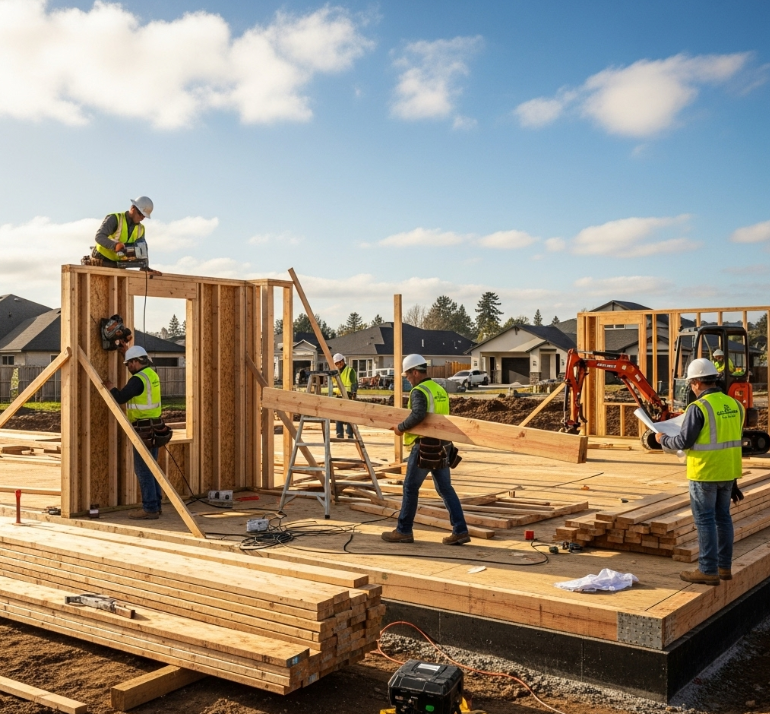
Deciding when to embark on the exciting journey of building a new home is a significant decision, and often, the time of year can play a crucial role. Homeowners typically ponder whether the warmth of Summer or the crispness of Winter offers a more advantageous building window. While both seasons present their own set of challenges and benefits, understanding the impact of temperature on building materials and construction processes is a key to a successful project.
Summer Construction: Long days & Potential Setbacks
The Summer season brings longer daylight hours, which can translate to more productive workdays for construction crews. The warmer temperatures are generally favorable for tasks like pouring concrete, roofing and painting because it allows materials to cure and adhere properly. However, Summer months also come with potential drawbacks.
One significant factor to consider is the availability of contractors. Summer months are often the busiest season for contractors, meaning you might experience wait times or higher costs. Another important factor to consider is that elevated humidity can affect certain materials like wood, causing swelling before installation which can lead to problems down the line. Consumers should ensure their chosen contractor has protocols in place to manage these challenges.
Winter Construction: Battling the Elements
Winter in and of itself presents a different set of considerations. Freezing temperatures can significantly impact materials like concrete, requiring the use of special additives and heating blankets to ensure proper curing. Masonry work can also be challenging in freezing conditions as mortar needs to be protected from frost. Inclement weather, including snow and ice, can also cause delays and create hazardous working conditions.
However, winter can also offer numerous advantages. Winter months present lower demand meaning you will be able to find more readily available contractors and lower costs. Dry Winter air can sometimes be beneficial for certain aspects of construction, such as framing as it can help reduce moisture content within the wood. Wood exposed to different periodic elements during construction plays a huge role.
The Role of Temperature on Building Materials
Temperature fluctuations can indeed affect various building materials.
Concrete: As mentioned, extreme temperatures hinder the hydration process crucial for concrete's strength. Cold weather slows it down, while excessive heat can cause it to dry too quickly, leading to cracking.
Wood: Wood expands in humid conditions and contracts in dry conditions. Significant temperature and humidity swings can cause warping, cracking, and issues with fit after installation.
Asphalt Shingles: Warm temperatures are needed for asphalt shingles to seal properly. Installing them in cold weather can make them brittle and prone to damage.
Paint and Adhesives: Most paints and adhesives have specific temperature ranges for optimal application and curing. Applying them outside these ranges can lead to poor adhesion, cracking, or other performance issues.
It's crucial that contractors are knowledgeable about these temperature sensitivities and take appropriate precautions during material storage, handling, and installation, regardless of the season.
Ensuring Quality: What Consumers Can Do
As a homeowner, there are several steps you can take to ensure a quality build, regardless of the chosen season:
Thorough Contractor Vetting: Check references, review past work, and ensure your contractor has experience with the specific challenges of building in your chosen season.
Detailed Contract: Ensure the contract outlines timelines, weather-related delays, and the contractor's responsibility for protecting materials and work in place from the elements.
Regular Site Visits: Monitor the progress and don't hesitate to ask questions about the materials and construction methods being used.
Independent Inspections: Consider hiring an independent inspector at key stages of the construction process to ensure compliance with building codes and quality standards.
An Informed Decision and the Role of Expertise
Ultimately, the best time to build a home depends on your personal timeline and budget. The key to a successful build is choosing a reputable contractor who understands the nuances of seasonal construction and is committed to proper material handling and installation, regardless of the temperature. In cases where construction defects or material failures arise, the expertise of forensic engineering can be invaluable. Forensic engineers like those at CED Technologies specialize in investigating these issues to determine the root cause, providing an objective analysis that helps ensure accountability and prevent future problems. CED Technologies offers a wide range of forensic engineering services, including the investigation of construction defects and material failures. By being an informed consumer and understanding the potential impact of temperature on building materials, you can navigate the construction process with greater confidence.