Shortcode Cleaner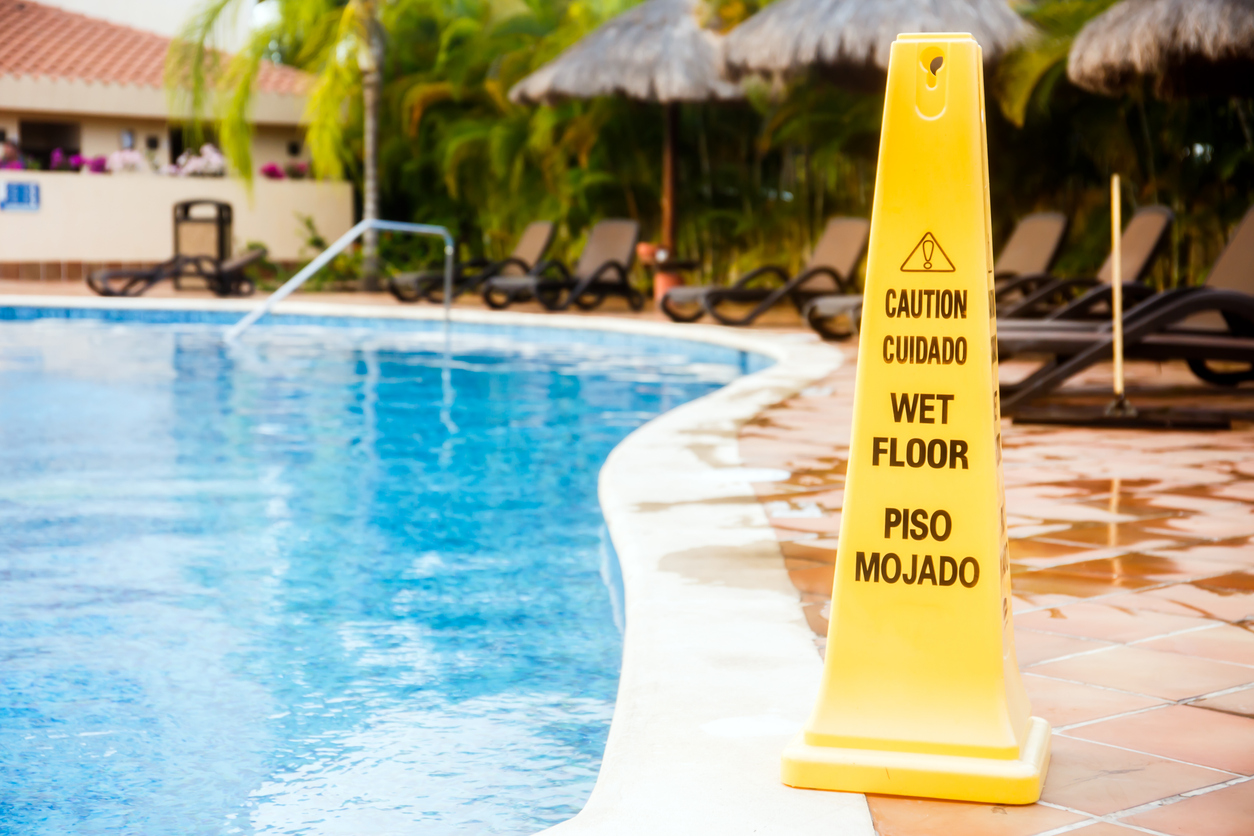
Summer is the peak season for commercial outdoor hospitality. From hotel pool decks and water parks to municipal plazas and outdoor retail walkways, foot traffic surges as families head outdoors. But when water, smooth surfaces, and heavy foot traffic collide, these summer hotspots quickly turn into liability landmines.
For insurance adjusters and defense or plaintiff attorneys, a summer slip-and-fall claim can be incredibly frustrating. The incident happens in the blink of an eye, the surface dries quickly, and the immediate evidence disappears. Was it a case of pure personal clumsiness, or does the property owner face massive liability due to a code violation? When a standard incident report isn't enough, the outcome of the case hinges on scientific data.
Common Summer Walkway and Pool Deck Problems
Outdoor summer venues present unique environmental and structural challenges that drastically increase the risk of a catastrophic fall. The most common issues that forensic engineers uncover include:
The Science of Slickness: A concrete, tile, or stone walkway that offers excellent traction when dry can become as slick as ice when coated with water, pool chemicals, or spilled drinks. Property owners often install decorative coatings that look beautiful but completely fail to maintain adequate traction when wet.
Improper Drainage and Micro-Ponding: Poor grading or structural settling on a pool deck can cause water to pool in low spots rather than flowing toward drains. These shallow puddles are often invisible to a walking pedestrian but create a slipping hazard to the pool patron. .
Algae, Mold, and Chemical Buildup: High summer heat combined with constant moisture creates a breeding ground for invisible algae or biofilm growth. Additionally, the buildup of sunscreen, body oils, and chlorine overspray can create a slick chemical film on concrete surfaces.
Thermal Expansion and Trip Hazards: Extreme summer heat causes concrete walkway slabs to expand. If the original construction lacked adequate expansion joints, the slabs can buckle, lip, or heave against one another, creating sudden, unexpected vertical lips greater than 1/4 inch which is the threshold widely recognized by safety codes as an actionable trip hazard.
The Role of Forensic Engineering
Tribometry: Instead of usually inspecting and touching a surface to determine surface slip resistance, we use a specialized mechanical device called a tribometer to scientifically test the walkway. Think of it as a scientific crash-test for shoes. We operate this device over the pool deck or walkway under both dry and wet conditions and the mechanical device displays the slip resistance index of the surface.
Building Code Auditing: We cross-reference the walkway's physical layout against local building codes and national safety standards. We check the micro-details that are easy to miss, such as:
Slopes: Is the deck properly sloped to let water run off, or does it allow dangerous puddles to sit?
Trip Hazards: Are there concrete joint lips or cracks higher than a quarter-inch (the standard safety limit)?
Safety Features: Are transition ramps, stairs, and handrails constructed to meet applicable codes?
Analyzing “Human Factors” and Visibility: A slip-and-fall isn't just about the ground, it’s about what the pedestrian could actually see. We reconstruct the scene to evaluate the environmental conditions at the time of the accident. We look at whether blinding summer sun glare, harsh evening shadows, or poor lighting hid a sudden step-down or a slick spot, making an otherwise obvious hazard a hidden trap.
The Bottom Line
Summer slip-and-fall & trip-and-fall claims don’t have to rely on guesswork or vanishing evidence. By bringing in a forensic engineer to analyze walkway traction, review building codes, and reconstruct the scene, you replace speculation with hard, undeniable data.