Shortcode Cleaner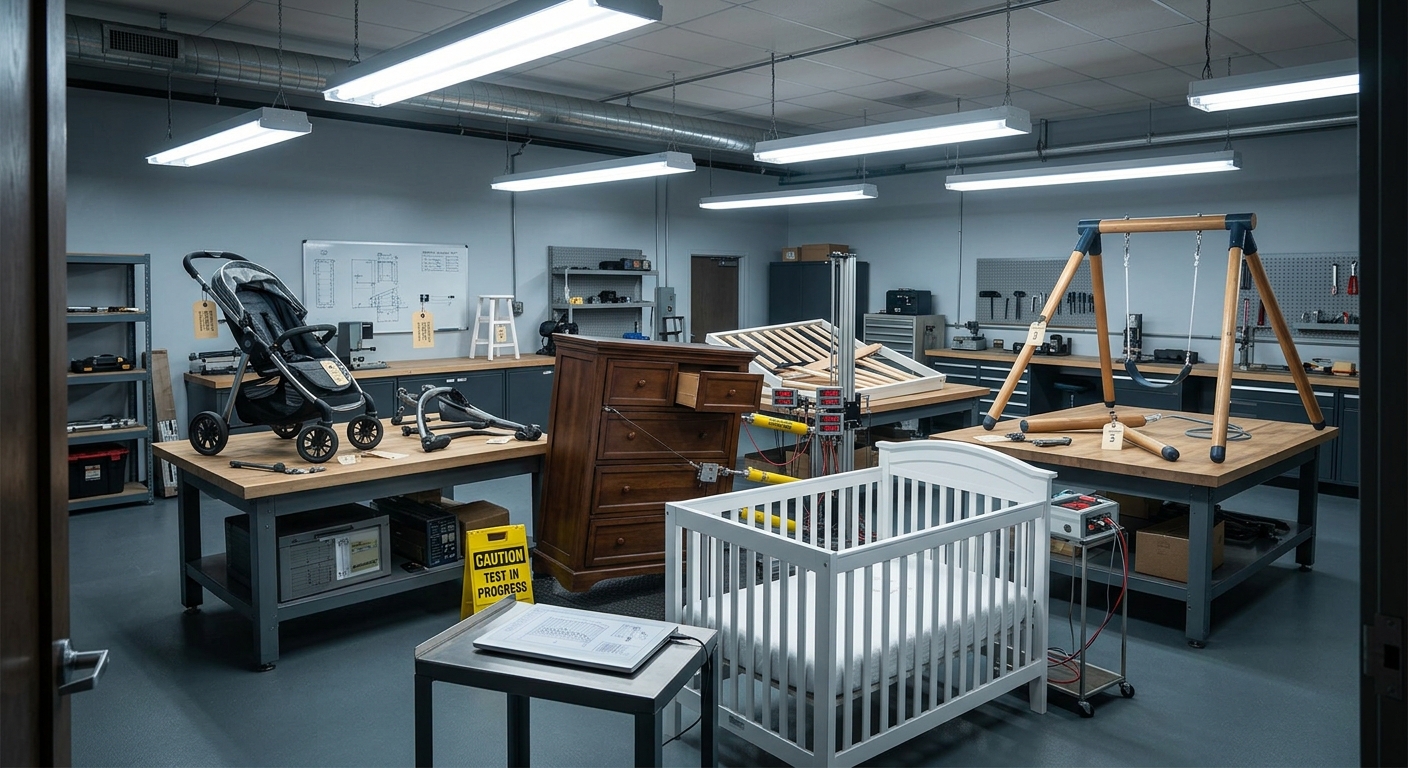
When a failure involves children's goods or furniture, the stakes for insurance claims adjusters and legal professionals could not be higher. Injuries caused by infant or juvenile products often carry significant exposure, complex liability webs, and heightened emotional sensitivities. Evaluating whether an incident stemmed from improper design, manufacturing defects, user error, poor assembly, or failure to adhere to federal safety standards requires far more than a visual inspection. To build an airtight case, establish clear liability, or evaluate subrogation potential, legal and insurance professionals rely on rigorous forensic engineering investigations grounded in objective physical evidence and standard compliance testing.
High-Risk Consumer Products in Juvenile Injury Claims
Certain categories of nursery and juvenile products appear disproportionately in property damage, and personal injury claims due to their routine dynamic use and interaction with growing children:
- Cribs and Bassinets: Designed for unattended sleep, these products carry stringent mandatory safety requirements. Slats, drop-side mechanisms, hardware attachments, and mattress supports are frequent points of interest during a post-incident evaluation.
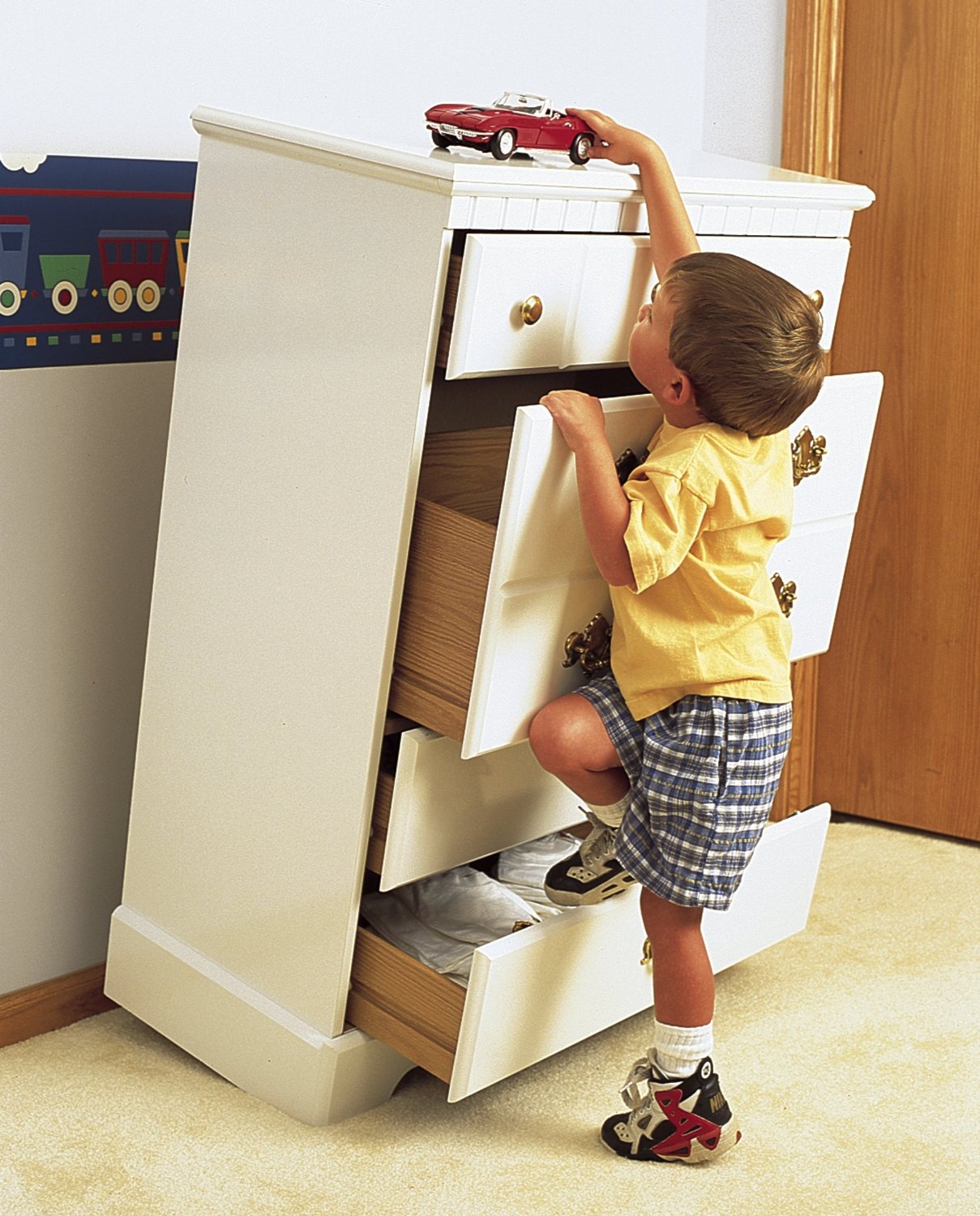
- Dressers and Storage Units: Free-standing clothing storage units present severe stability risks when drawers are opened or climbed upon, making them a primary focus of tip-over litigation.
- High Chairs and Strollers: Mobile or elevated seating devices experience frequent folding, unfolding, restraint adjustment, and heavy cyclic loading during daily use.
- Bunk Beds and Loft Beds: Elevated sleep structures introduce substantial structural demand on guardrails, ladders, corner posts, and mattress foundation supports.
- Play Sets and Indoor/Outdoor Gyms: Heavy mechanical playground hardware and structural framing are routinely subjected to outdoor environmental stress, dynamic impact loads, and multi-user weights.
Common Modes of Product Failure and Hazard Patterns
When these products fail, the mechanism of failure generally falls into distinct mechanical and structural categories:
- Tip-Over Incidents: Unanchored tall furniture, such as dressers, bookcases, and armories, can become unstable when center-of-gravity shifts occur (e.g., pulling out multiple weighted drawers or climbing on lower drawers).
- Entrapment and Suffocation Hazards: Structural gaps between slats, guardrails, ladders, or frame components can create dangerous head, neck, or torso entrapment zones if structural dimensions shift or deviate from regulatory safety standards.
- Mechanical Crushing and Pinch Points: Folding mechanisms in strollers, high chairs, and playpens can fail or unexpectedly disengage, creating hazardous shear mechanisms and pinch points.
- Structural Collapse and Material Degradation: Fastener stripping, weld failures, plastic embrittlement, wood splitting, and joint fatigue can lead to catastrophic structural collapse under normal or foreseeable abuse loads.
The Role of Forensic Engineering
A forensic engineering investigation transforms subjective claims into verifiable, scientifically defensible facts. When retained, forensic engineers perform detailed investigations that include:
- Exemplar and Evidence Evaluation: Utilizing non-destructive testing, microscopy, stress-strain analysis, and CT scanning to analyze fracture surfaces and material properties without compromising evidence integrity.
- Regulatory and Standard Compliance Audit: Evaluating product dimensions, warning labels, and structural integrity against standard specifications set by the Consumer Product Safety Commission (CPSC), ASTM International standards (such as ASTM F2057 for clothing storage units), and federal safety codes.
- Failure Mode and Effects Analysis (FMEA): Determining whether the root cause lies in a design flaw, a manufacturing defect, improper third-party assembly, or user modification/abuse.
- Reconstruction and Simulation: Utilizing 3D modeling, load testing, and mathematical stability calculations to reconstruct the exact sequence of events leading up to the incident.
Why Choose CED Technologies
When complex liability hangs in the balance, CED Technologies provides the expertise, thoroughness, and clarity needed to resolve claims and legal disputes effectively. CED’s team comprises licensed professional engineers ensuring a comprehensive analysis of both product failure mechanisms and injury biomechanics. Ultimately, partnering with CED Technologies ensures that claims adjusters and attorneys receive actionable answers, unambiguous root-cause determinations, and expert guidance through every stage of litigation